

Dressing a newborn for sleep can feel surprisingly complicated. A baby who is too cold may be uncomfortable, but piling on extra clothes is not the answer. Overheating is associated with a higher risk of sudden infant death syndrome (SIDS), so the goal is to keep your baby comfortably warm without over-bundling them.
If you are wondering how to dress a newborn for sleep by room temperature, start with the temperature of the room where your baby actually sleeps, not the weather outside. A room thermometer is more useful than guessing. Then choose breathable sleepwear and adjust one layer at a time based on how your baby feels.
For every sleep, keep the bigger safe-sleep picture in mind. Place your newborn on their back on a firm, flat sleep surface, keep loose blankets and soft objects out of the sleep space, and avoid weighted sleepwear. A properly fitted wearable blanket or sleep bag can be used instead of loose bedding.
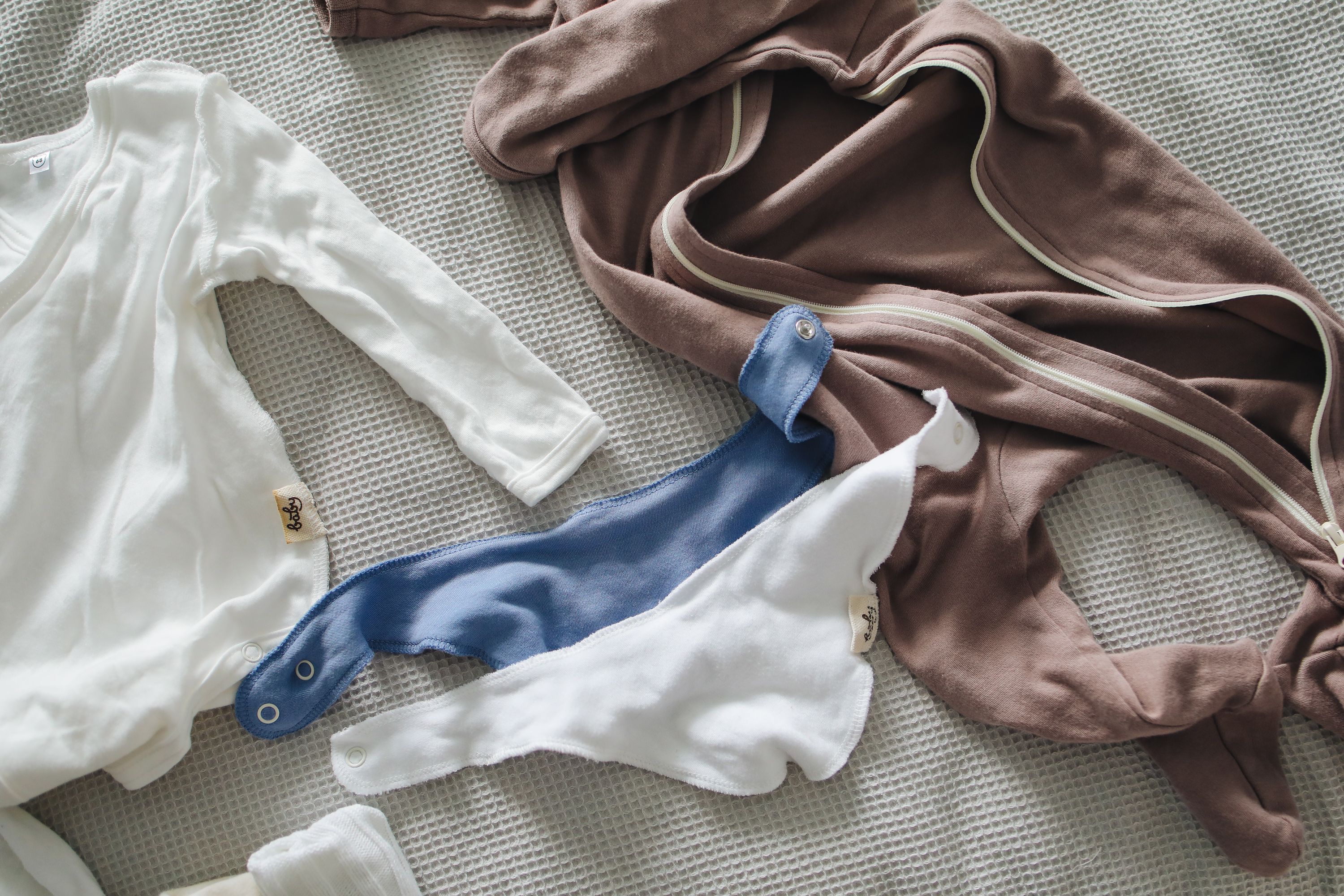
What Should a Newborn Wear to Sleep at Different Room Temperatures?
There is no single outfit that works for every newborn. Fabric, airflow, the sleep bag you use, the number of layers, and your baby's individual temperature can all affect how warm they feel. The Lullaby Trust specifically notes that there is no universal clothing and TOG chart that works for every product or baby.
Here is a practical starting point:
|
Room temperature |
Possible starting point |
|
Below 16°C / 61°F |
Long-sleeve sleepwear plus an appropriately warmer sleep bag |
|
16-20°C / 61-68°F |
Sleepsuit or baby grow plus a well-fitting sleep bag |
|
20-22°C / 68-72°F |
Light cotton sleepwear plus a lightweight sleep bag |
|
22-24°C / 72-75°F |
Lightweight bodysuit plus a lower-TOG sleep bag |
|
24-27°C / 75-81°F |
Short-sleeve bodysuit with a very lightweight sleep bag, if needed |
|
Above 27°C / 81°F |
A single light layer or, in very hot conditions, just a diaper |
These combinations are examples rather than fixed rules. Always check your baby and follow the instructions for the specific sleepwear you use.
Below 16°C / 61°F
A room below 16°C is on the cool side according to UK safer-sleep guidance. Rather than piling blankets over your newborn, use warm but breathable clothing and, if you use a sleep bag, choose an appropriately warmer TOG according to the manufacturer's instructions. If your baby's chest feels cool, add one clothing layer or choose a warmer sleep bag instead of placing loose bedding over the baby.
16-20°C / 61-68°F
The Lullaby Trust and NHS identify approximately 16-20°C as a comfortable room-temperature range for sleeping babies. A sleepsuit or baby grow with a well-fitting sleep bag can work well. The sleep bag should fit securely around the neck and shoulders so your newborn cannot wriggle down inside it.
20-22°C / 68-72°F
As the room becomes warmer, reduce insulation. Lightweight sleepwear with a lightweight sleep bag, such as one made from bamboo fabric, may be a reasonable starting point. If your newborn tends to feel warm, a lighter layer underneath may be enough. Check their chest or the back of their neck after settling them rather than assuming they need another layer.
22-24°C / 72-75°F
At this temperature, keep sleepwear light. Depending on the specific sleep bag's instructions, a lightweight or short-sleeve bodysuit paired with a lower-TOG sleep bag may be suitable. Avoid adding a hat, extra blanket, or a second sleep sack simply because your baby's hands feel cool. Cool hands and feet can be normal.
24-27°C / 75-81°F
In a warm room, keep clothing minimal. Depending on the manufacturer's guidance, your newborn may need only a short-sleeve bodysuit with a very lightweight sleep bag. In hotter conditions, one lightweight layer can be enough.
Above 27°C / 81°F
When the room is very warm, your baby may only need a short-sleeve vest, lightweight bodysuit, or even just a diaper. The Lullaby Trust notes that minimal clothing can be appropriate during particularly hot weather. Keep the sleep space away from direct sunlight and heat sources, and if you use a fan, do not point it directly at your baby.
The most important point is that a temperature chart should be treated as a starting point. Your baby's actual temperature and the instructions for their sleepwear matter more than following a chart perfectly.
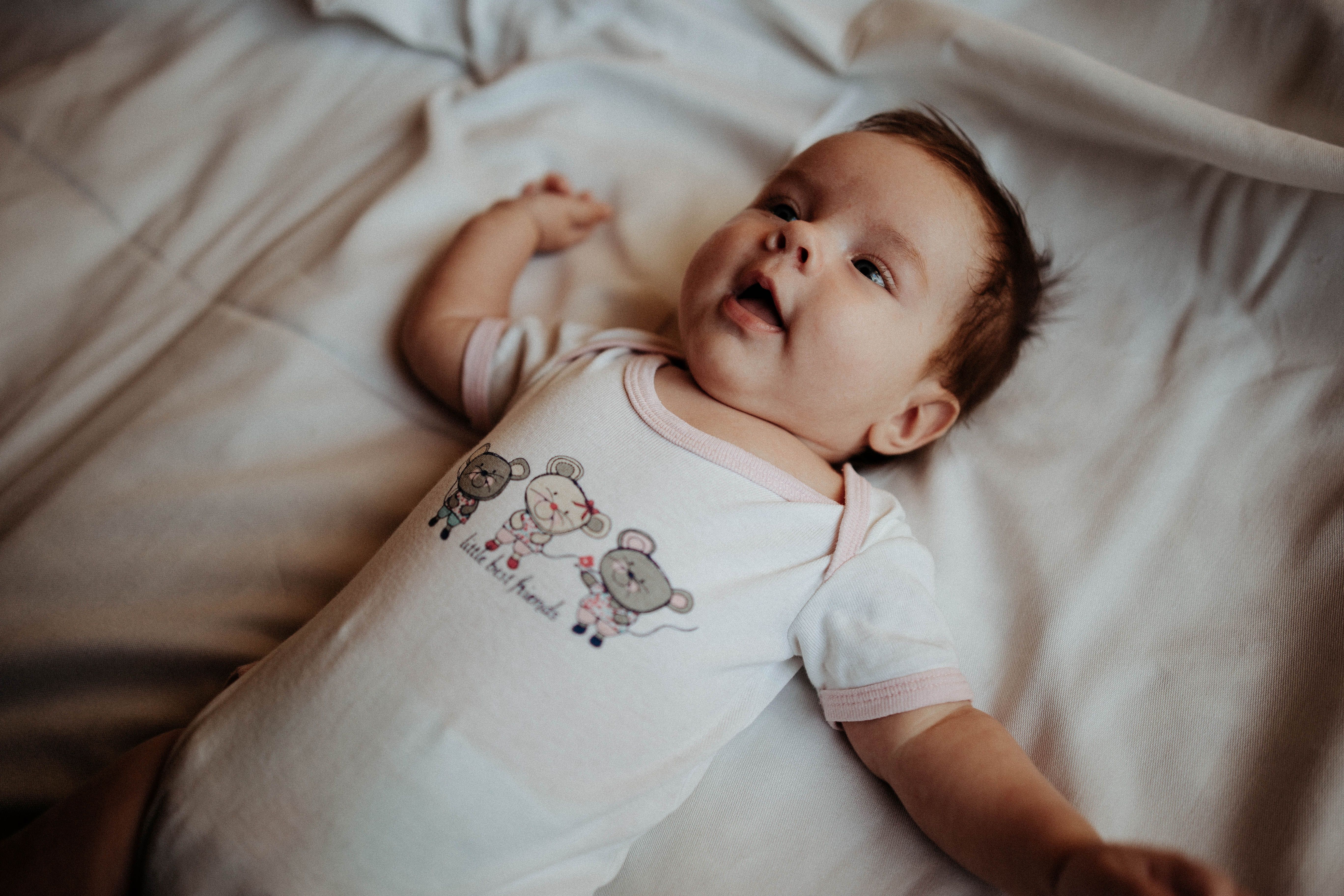
When the room is very warm, your baby may only need a short-sleeve vest, lightweight bodysuit
How Many Layers Should a Newborn Wear to Sleep?
A useful rule of thumb from the American Academy of Pediatrics is to dress your baby in only one more layer than you would wear in the same environment. For example, if you are comfortable in one light layer, your newborn may be comfortable with a bodysuit plus an appropriate wearable blanket or sleep bag.
Think of a sleep bag as part of your baby's total insulation, not as an accessory added after you have already dressed them warmly. Two garments plus a thick sleep bag may provide significantly more warmth than expected.
Avoid doubling sleep bags or stacking thick layers. Air trapped between layers increases insulation, and putting two products together does not create a reliable combined TOG rating. Weighted swaddles, weighted blankets, and weighted sleep sacks should also be avoided for infant sleep.
For newborns who are swaddled, keep the layers underneath appropriate for the room temperature. The AAP advises stopping swaddling when your baby shows signs of trying to roll because being swaddled while rolling onto the stomach can increase suffocation risk. Rolling commonly becomes noticeable around 3 to 4 months but can begin earlier.
How to Choose the Right TOG for the Room Temperature
TOG is a measure of thermal insulation. Put simply, a higher TOG provides more insulation, while a lower TOG is designed for warmer conditions.
You may see general sleepwear guides suggesting very low TOGs such as 0.2 or 0.5 for hot rooms, approximately 1.0 TOG for warmer or mild rooms, and 2.5 TOG or higher for cooler conditions. However, these numbers should not be treated as a universal temperature chart.
Different sleep bags use different fabrics, construction methods, sleeves, fits, and clothing combinations. For that reason, the Lullaby Trust recommends following the manufacturer's TOG guide for the specific product rather than relying on a generic internet chart.
When choosing a TOG:
-
Measure the nursery temperature. Use the temperature inside the room rather than the season or outdoor temperature.
-
Check the manufacturer's TOG chart. Look at both the recommended room temperature and what your baby should wear underneath.
-
Check the fit. The sleep bag should fit correctly around the neck and shoulders so your newborn cannot slide inside it.
-
Count every layer. A bodysuit, pajamas, swaddle, and sleep bag all contribute warmth.
-
Check your baby. A TOG label is a starting point, not a substitute for checking whether your newborn actually feels comfortable.
Do not put an extra blanket over a sleep bag just because the room feels cool to you. If your baby is genuinely cool, adding an appropriate clothing layer or switching to a warmer sleep bag according to the manufacturer's guidance gives you more predictable insulation.

Zumbamboo’s TOG guide for choosing baby sleepwear based on room temperature
How to Check If Your Newborn Is Dressed Too Warm or Too Cold
Your newborn's hands and feet are not reliable temperature guides. They commonly feel cooler than the baby's core even when the baby is comfortable. Instead, feel your baby's chest, tummy, or the back of their neck.
Signs your newborn may be too warm include:
-
A hot or sweaty chest or neck
-
Sweating or damp hair
-
Flushed skin
-
Clothing that feels excessively warm against the body
If your baby's skin feels hot or sweaty, remove a layer and check them again. Do not put a hat on your newborn for indoor sleep once you are home from the hospital, since head covering can contribute to overheating.
If your baby's chest feels cool, add one light clothing layer or choose a warmer sleep bag that is suitable for the room. Avoid adding several layers simply because their hands or feet feel chilly.
Illness can also change how warm your newborn feels. A baby with a fever should not be wrapped in additional layers to try to keep them warm. If your newborn has a fever, seems unusually sleepy, feeds poorly, has difficulty breathing, or you are concerned about how they look or behave, seek medical advice promptly.
Conclusion
Learning how to dress a newborn for sleep by room temperature is less about finding one perfect outfit and more about following a simple routine: measure the room temperature, choose appropriate lightweight layers and sleepwear, then check your baby's chest or neck.
For many families, the easiest guideline to remember is one light layer more than an adult would comfortably wear, while avoiding loose bedding, hats indoors, weighted sleep products, and unnecessary layering.
Use TOG as a useful guide, but always follow the instructions for your specific sleep bag because materials and insulation levels vary between products. Most importantly, check your baby rather than relying only on a chart. The goal is a newborn who feels comfortably warm, is not hot or sweaty, and sleeps in a clear, safe sleep space.


