


If your baby wakes after 30 minutes nap almost every time, it can be frustrating, especially when they still seem tired afterward. You may spend 20 minutes helping your baby fall asleep, only to hear them crying or chatting in the crib half an hour later.
The good news is that short naps are common during infancy. Babies' sleep patterns develop gradually, and younger babies do not have the same mature sleep cycles as older children or adults. According to the American Academy of Pediatrics (AAP), babies do not develop regular sleep cycles until around 4 to 6 months of age.
Still, frequent 30-minute naps can sometimes be a sign that your baby's schedule, sleep environment, feeding needs, or developmental stage needs a small adjustment.
Here's how to understand what may be happening and what you can do about it.

Is It Normal for a Baby to Wake After 30 or 45 Minutes?
Yes. A baby waking after 30 to 45 minutes can be completely normal, particularly during the first several months of life.
Infant sleep is very different from adult sleep. Newborn sleep includes different stages of REM and non-REM sleep, and sleep patterns continue developing throughout infancy.
Because babies naturally move between lighter and deeper stages of sleep, they may briefly wake at certain points during a nap. Some babies transition smoothly into another period of sleep. Others wake fully and need help settling again.
Age also matters. Newborns may sleep for short or long periods throughout the day and night without a predictable schedule. The NHS notes that sleep needs vary widely between babies, particularly during the newborn stage.
For babies between 4 and 12 months, the American Academy of Sleep Medicine recommends approximately 12 to 16 hours of total sleep within 24 hours, including naps. However, that total sleep can be distributed differently from one baby to another.
So, a 30-minute nap is not automatically a problem. The bigger question is how your baby behaves afterward and whether they are getting enough overall sleep.
Why Does My Baby Keep Waking After One Short Nap?
When a baby wakes after 30 minutes nap, there is rarely one universal explanation. Several factors may contribute.
1. Your baby has reached a lighter stage of sleep
One of the simplest explanations is that your baby naturally became more alert during a transition between sleep stages.
Young babies are still developing their ability to move from one period of sleep into another without fully waking. Sleep patterns tend to become more organized as babies grow.
This means short naps may gradually improve without any major intervention.
2. Your baby may not be tired enough
If your baby goes down for a nap before enough sleep pressure has built up, they may fall asleep but wake shortly afterward feeling refreshed.
For example, your baby's sleep needs may have changed as they have grown, but their nap schedule may still be based on an earlier routine.
Rather than following the clock alone, watch your baby's overall sleep pattern, behavior, and tired signals. The NHS recommends learning your baby's cues for when they are ready to sleep, rest, feed, or play.
3. Your baby may be overtired
The opposite can also happen.
A baby who has stayed awake for too long may have difficulty settling comfortably and staying asleep. You might notice that they are especially fussy before the nap, struggle to fall asleep, or wake crying after a short sleep.
This is why finding the right balance between daytime activity and rest is often more helpful than trying to force a specific nap length.
4. Hunger may be waking your baby
Depending on your baby's age, feeding schedule, and individual needs, hunger may interrupt a nap.
This is especially relevant for newborns and younger infants who need frequent feeds.
If short naps regularly occur around feeding times, look at your baby's feeding pattern alongside their sleep pattern rather than treating the nap as an isolated issue.
5. The sleep environment may be disturbing them
Light, household noise, temperature changes, or sudden sounds may be easier for your baby to ignore while deeply asleep but noticeable when they enter lighter sleep.
A consistent, calm environment may make it easier for some babies to return to sleep after briefly stirring.
Whatever sleep environment you use, safe sleep should always come first. The CDC and AAP recommend placing babies on their backs for every sleep, including naps, on a firm, flat sleep surface with soft bedding, pillows, loose blankets, and soft toys kept out of the sleep area.
6. Your baby's sleep needs may be changing
Nap patterns do not remain constant throughout the first year.
As babies grow, their sleep becomes more organized and the number, timing, and duration of naps can change. The NHS notes that just when parents feel they have settled into a routine, their baby's sleep pattern may change again.
A temporary period of short naps may therefore be part of normal development rather than something you need to "fix."
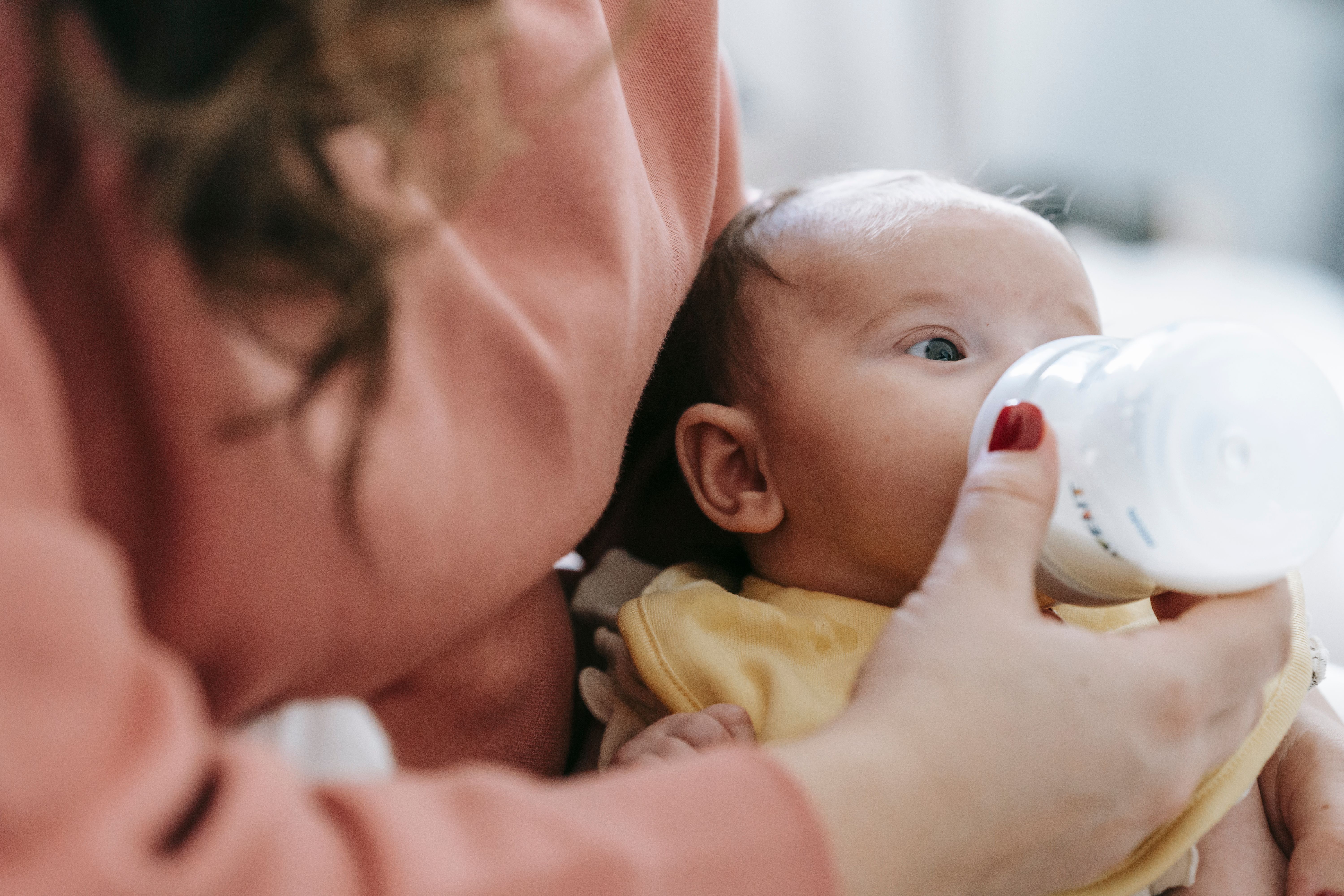
Hunger may wake your baby
How Can I Tell What Is Causing My Baby's Short Naps?
Instead of focusing on one 30-minute nap, look at patterns across several days.
Start by tracking four things:
1. How long your baby was awake before the nap
Notice whether shorter naps tend to happen after particularly short or long periods of wakefulness.
2. Your baby's mood before falling asleep
Were they calm and sleepy, wide awake, or already crying and overtired?
Recognizing when your baby needs rest can help you find a nap rhythm that suits them rather than relying entirely on a rigid schedule.
3. How your baby behaves after waking
This can provide an important clue.
A baby who wakes after 30 minutes smiling, alert, and ready to play may simply have finished their nap.
A baby who wakes rubbing their eyes, yawning, crying, or clearly wanting to go back to sleep may still be tired.
4. Total sleep across 24 hours
A single nap does not tell you whether your baby is getting enough sleep.
For babies 4 to 12 months, the recommended total is generally 12 to 16 hours per 24 hours, including naps. Individual needs vary within that range.
Looking at the whole day gives you much more useful information than trying to make every individual nap last a certain number of minutes.
What Should I Do When My Baby Wakes After 30-45 Minutes?
First, don't assume you need to intervene immediately every time.
If your baby wakes quietly and appears comfortable, you can give them a little time to see what happens. Some babies briefly wake or make noises before settling again.
For babies around 4 months and older, the AAP suggests putting them down when they are drowsy rather than waiting until they are fully asleep. This can gradually give babies opportunities to become familiar with falling asleep in their own sleep space.
You can also try the following strategies.
Keep a simple pre-nap routine
Your routine does not need to be elaborate.
It might include:
-
Changing your baby's diaper
-
Closing the curtains
-
Feeding if appropriate
-
Reading a short book
-
Singing the same song
-
Giving your baby a cuddle
-
Placing them in their sleep space
Consistency can help create predictable signals that sleep is coming. Calm and predictable sleep routines are commonly recommended as part of healthy sleep habits.
Experiment with nap timing
If your baby consistently wakes happy after 30 minutes, try slightly adjusting when the nap begins.
If they consistently wake tired and upset, consider whether they may need an earlier opportunity to sleep.
Make changes gradually rather than changing the entire daily schedule at once. This makes it easier to tell whether an adjustment is actually helping.
Give your baby an opportunity to resettle
If your baby wakes after 30 to 45 minutes but is not distressed, you do not necessarily need to pick them up immediately.
Pause briefly and observe.
They may fall back asleep independently. If crying escalates or your baby clearly needs you, respond according to their age and needs.
Avoid trying to extend naps in unsafe ways
When parents are exhausted, it can be tempting to let a baby continue sleeping on a sofa, adult bed, cushion, inclined sleeper, or other soft surface because it seems to produce a longer nap.
A longer nap is never worth compromising sleep safety.
Babies should be placed on their backs on a firm, flat, approved sleep surface, with soft objects and loose bedding kept out of the sleeping area.
Look at the entire daily routine
Short naps can sometimes improve when the overall day becomes more balanced.
Consider feeding, playtime, exposure to daylight, nap timing, and bedtime together rather than treating each nap as a separate problem.
Most importantly, remember that your goal is not necessarily a two-hour nap. It is a well-rested baby getting an appropriate amount of sleep across the entire day.
When Should You Talk to Your Pediatrician?
Short naps alone are usually not a reason to panic.
However, you should contact your pediatrician or healthcare provider if you are concerned about your baby's sleep, feeding, growth, breathing, or overall health.
Seek professional advice if sleep changes are accompanied by symptoms such as difficulty breathing, unusual pauses in breathing, persistent vomiting, feeding difficulties, poor weight gain, extreme sleepiness, unusual lethargy, signs of illness, or anything else that makes your baby seem significantly different from usual.
You should also speak with your baby's healthcare professional if their sleep difficulties are persistent and are affecting their wellbeing or you simply feel something is not right. The NHS specifically recommends seeking professional advice when parents have ongoing concerns about their baby's sleep or need additional support with establishing a routine.
A pediatrician can consider your baby's age, development, feeding, growth, medical history, and sleep behavior together.
Conclusion
If your baby wakes after 30 minutes nap, it does not necessarily mean that anything is wrong.
Short naps can be a normal part of infant sleep, particularly while sleep patterns are still developing. Your baby's nap length may also change from week to week as their sleep needs, feeding patterns, and development evolve.
Instead of measuring success by whether every nap lasts an hour or longer, look at your baby's overall picture: total sleep, mood, feeding, development, and how they behave when they wake.
A consistent routine, appropriate nap timing, a calm environment, and opportunities to resettle may gradually help. At the same time, always prioritize safe sleep practices over techniques designed simply to make naps longer.
And if your baby's short naps come with feeding, growth, breathing, or health concerns, your pediatrician is the best person to help determine what is going on.


